
THROWBACK THURSDAY: Mourning a True Poet on the Anniversary of His Death
Just Kidding! I'm talking about Rod McKuen

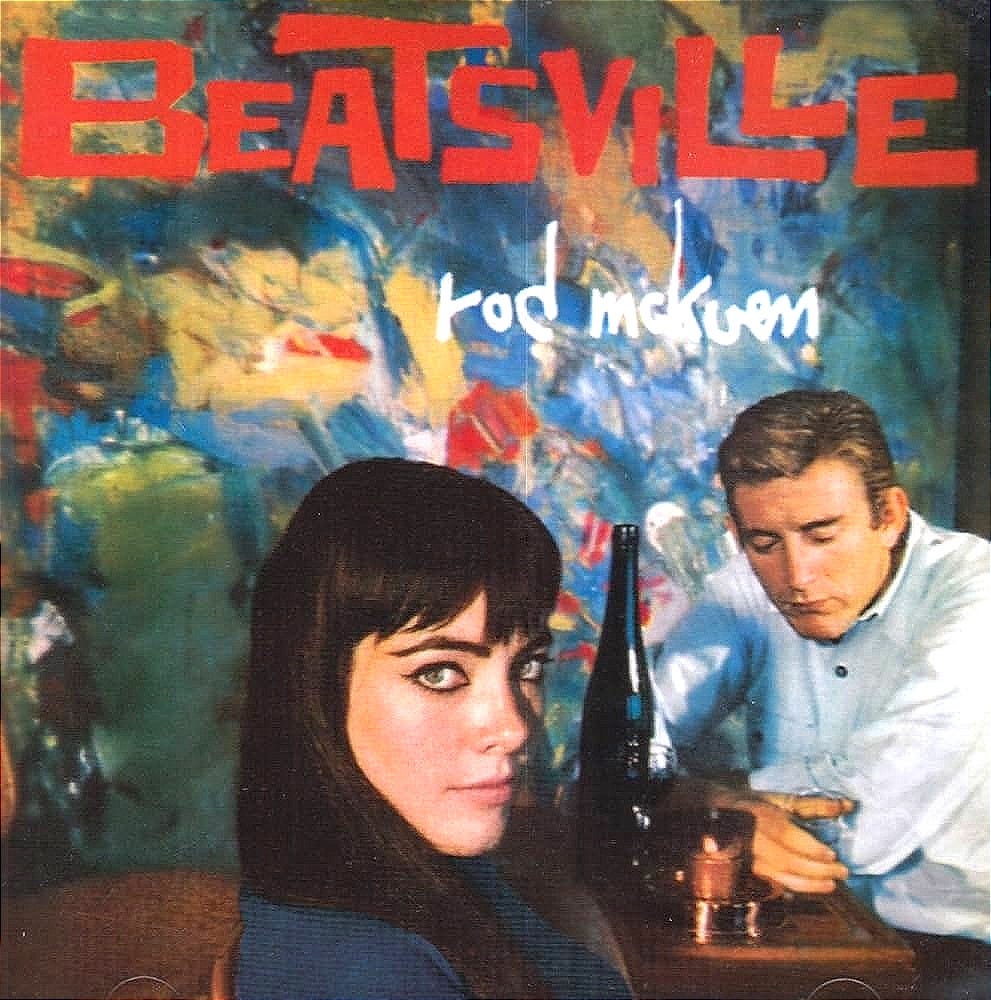
Today is the 11th anniversary of a guy who probably was the best-known — if one of the least-respected — American poet of the 1960s: Rod McKuen.
He’s with Sloopy now.
For younger readers unfamiliar with McKuen: No big deal. Don’t worry about it. I’m not asking you, or anybody, to listen to the Worm, uh, I mean Warm.
But before he became known as a sappy poet, Hot Rod recorded a bunch of silly, trashy novelty songs.
Several publications at the time of his death said that McKuen in his early days, regularly performed in San Francisco alongside Beat poets like Allen Ginsberg, Jack Kerouac and Maynard G. Krebbs (sorry, that last one’s a joke.) The New York Times said, “Mr. McKuen’s poetry formed an enduring, solidly constructed bridge between the Beat generation and New Age sensibilities.” (Read a paywall free version of that obit HERE.)
I hope that doesn’t offend anyone’s New Age sensibilities.
But did Rod have true affinity for the Beats? Or did he just like to make corny jokes about them?
Here’s a 1959 tune he recorded with a guy named Bob McFadden (McKuen under his secret identity, DOR — which is “Rod” spelled backward.) Who’s Bob McFadden? He was best known as the voice of a parrot for Wisk laundry detergent, that hilarious bird who’d say “Ring around the collar” and “Pretty shirt” in Wisk commercials.
Here are McFadden & DOR, who apparently were trying to save the beatniks from those dirty rings:
Scoff if you want, but apparently a guy named Richard Hell, who may or may not have had ring around the collar, was listening. And, in the mid ‘70s, he used this number as a springboard:
Rod wasn’t done with those comical beatniks though. Not long after his collaboration with McFadden, McKuen released his real-gone, spoken-word Beatsville album (the cover of which is at the top of this post). McKuen wrote the music — but not the poetry — on this cool daddio single from Beatsville:
The flip side of Bob McFadden & Dor’s “The Beat Generation” was called “The Mummy,” which pre-dated “The Monster Mash” by a couple of years:
Years later The Fall covered it as “I’m a Mummy”:
Here’s a strange one by Dor — sans Bob McFadden — with a band aptly called The Confederates. It’s also from 1959. I assume Rod was trying to be funny, but judging by the comments on some of the YouTube uploads of the song, (most of which seem to be uploaded by people outside of the U.S. Hmmmm....) some contemporary neo-confederate dumbshits seem to have taken it seriously:
The flip side of this master-race masterpiece was this oddity called “The 4-D Man,” which I suspect was based on a 1959 movie of the same name. The film, starring Robert Lansing and Lee Meriwether, was about a scientist who “discovers a formula enabling him to pass through solid surfaces, but he also rapidly ages, which forces him to kill humans in order to reverse the aging process by absorbing his victims' energies.” (Damn! I knew there was a catch!) The music sounds a lot like the I Dream of Jeannie Theme:
I know this is painful.
Just one more. And this one wasn’t meant as a kooky novelty songs.
In the 1960s, after his DOR days, McKuen translated several Jacques Brel songs, helping to popularize the Belgian songwriter. One of those, a 1961 composition called “Le Moribond” (The Dying Man), McKuen turned into “Seasons in the Sun.” It’s a song about a man (a dying one) saying goodbye to his loved ones.
In defense of McKuen, he’s not the one who ruined Brel’s song. That award goes to a funky dude with a Mr. Brady haircut named Terry Jacks, a Canadian wimp-rocker who completely cut the nuts off of this song.
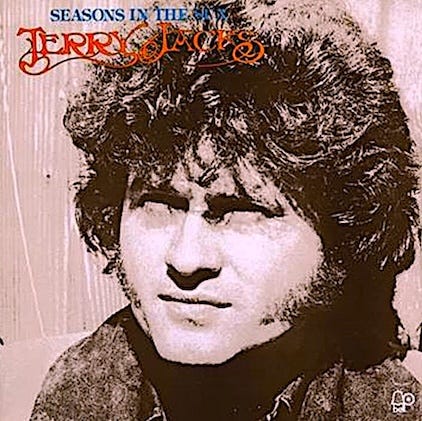
McKuen’s translation, like Brel’s original, had a verse about the dying man revealing that his wife and his best friend had cuckolded him. In McKuen’s version:
You cheated lots of times but then
I forgave you in the end
For your lover was my friend…
But when Jacks got his paws on it in 1974, that verse ended up on the cutting-room floor. And it became a huge AM radio hit.
Knowing the background story helps one appreciate the 1990 version by Too Much Joy, a New York group that restored McKuen’s original verses about the dying man’s unfaithful spouse.
I wonder if Rod noticed.
Have joy. Have fun.